
On the surface, Ireland and India appear to have little in common. They are separated by nearly 8,000 kilometres. Their climates, cuisines and cultures seem worlds apart. Yet hidden beneath the surface of everyday speech lies a fascinating web of linguistic connections. Words and phrases have travelled between the two nations for centuries, carried by soldiers, traders and travellers. One of the most intriguing examples is the Irish slang word “dekko” – a small piece of India that found a permanent home in the English of Ireland.
“Dekko”: An Indian Word in Irish Mouths
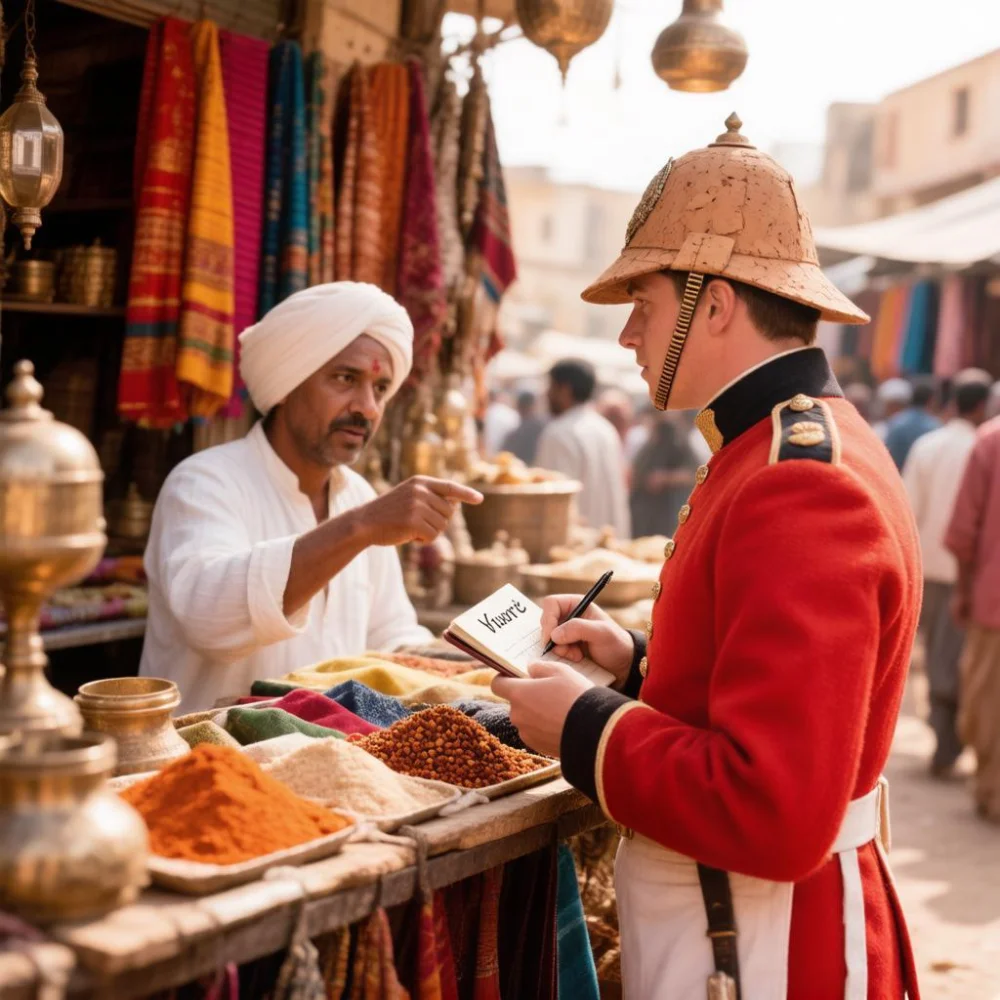
Whenever a teacher was late to class in a Dublin school, a student would be appointed to keep “dekko” for their arrival. The word is slang for “to look” or “to keep watch”. It derives directly from the Sanskrit and Hindi word “dekho”, which means exactly the same thing – “look” or “see”.
How did an Indian word become part of Irish school slang? The answer lies in the 19th century. British and Irish soldiers serving in India picked up the word from the local population and brought it back with them. It entered the vocabulary of the British Army and from there spread into everyday speech in Britain and Ireland. In Dublin schools, it became a familiar part of playground language.
The linguistic connection may go even deeper. Professor Daithí Ó hÓgáin of University College Dublin’s folklore department once suggested that “dekko” might share a root with the Irish verb “d’fhéach”, which is the past tense of “to look”. Some scholars have proposed an even closer link – the Irish verb “dearc”, meaning to look, is almost certainly related to “dekho”. Both words trace back to the same ancient Proto-Indo-European root *derk-. This means that the Irish word for looking and the Hindi word for looking may be distant cousins, descended from a common ancestral language spoken thousands of years ago.
Other Indian Words in Irish English
” Dekko” is not the only Indian word that found its way into Irish speech. The centuries of British rule in India brought many words from the subcontinent into the English language, and Ireland absorbed them too.
Words like “bungalow”, “pyjamas”, “tiffin”, “veranda”, “curry”, “cheroot”, “chintz”, “calico”, “gingham”, “mango”, “junk” and “catamaran” all crept into English from the days of Britain’s colonial rule in India. While many of these are now used throughout the English-speaking world, they were also adopted in Ireland, where the British military presence and colonial connections made them familiar.
Some words of Indian origin have a more specific presence in Irish English. “Pukka”, meaning genuine or proper, comes from the Hindi “pakka”. “Chitty”, meaning a note or letter, comes from the Hindi “chitthi”. “Cushy”, meaning easy or comfortable, comes from the Hindi “khush”, meaning happy or pleasant. These words entered the vocabulary of Irish soldiers and administrators who served in India and brought the language of the Raj back home with them.
Deeper Linguistic Roots: Irish and Sanskrit
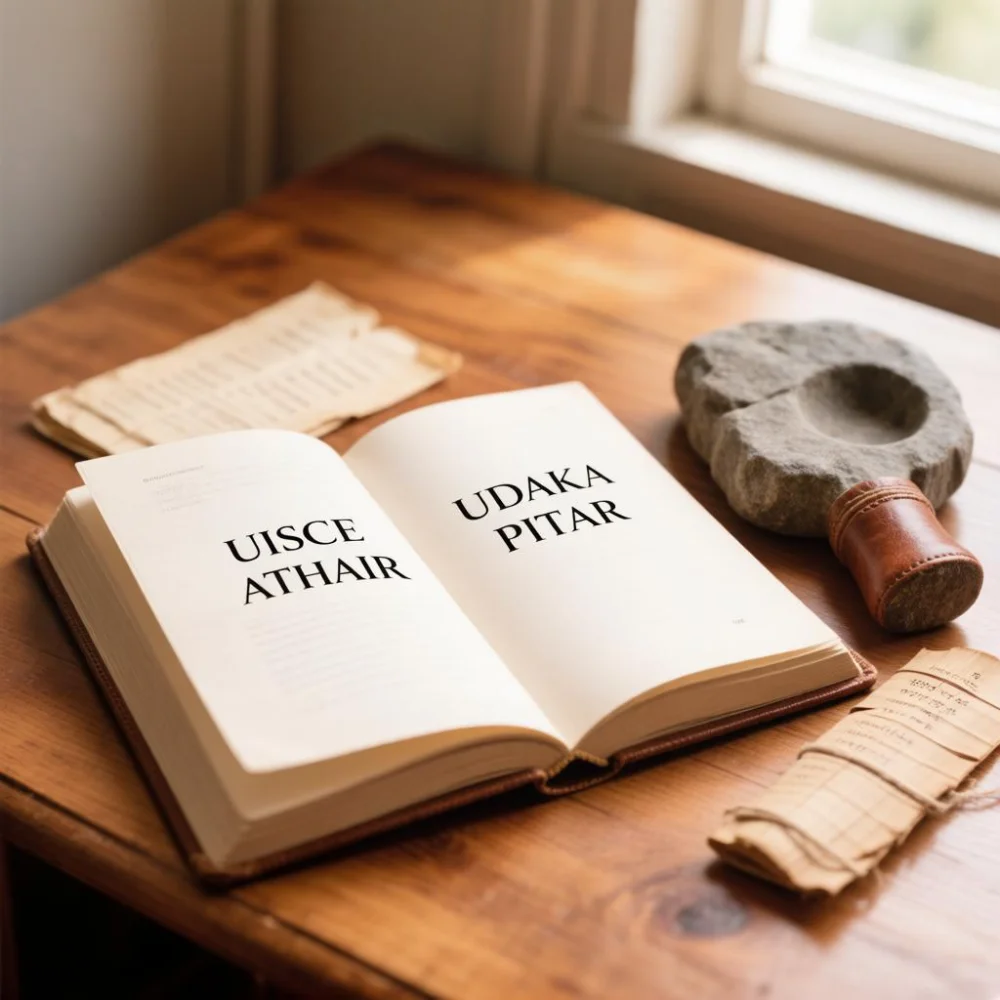
Beyond the words borrowed during the colonial era, there are deeper linguistic connections between Ireland and India that go back thousands of years. Both Irish and Sanskrit belong to the Indo-European family of languages. They share a common ancestral root that stretches back to prehistoric times.
The similarities are striking. The Irish word “uisce” (water) is related to the Sanskrit “udaka” (water). “Pitar” in Sanskrit and “athair” in Irish both mean father. “Svásṛ” in Sanskrit and “siur” in Irish both mean sister. These are not coincidences. They are evidence of a shared linguistic heritage that predates recorded history.
Other connections are equally fascinating. The Irish word “Aire” means nobles – the highest caste in ancient Ireland. In Sanskrit, “Arya” are the noblemen, particularly in North Indian society. The Sanskrit word “Naib” means good and comes from the same ancestral root as the Old Irish word “noeib”, from which the modern Irish word “naomh” (saint) derives. The Sanskrit word for deaf is “Badhira”; in Irish it becomes “bodhar”.
Manchán Magan, an Irish writer and documentary filmmaker, has explored these connections in his book Brehons and Brahmins: Resonances Between Irish and Indian Cultures. He notes that even the words “raja” (king in Hindi) and “Ri” (king in Irish) are connected. The book maps similarities in language, law and lore that point to a shared kinship thousands of years ago.
Folk Tales and Shared Stories
The linguistic connections between Ireland and India extend beyond individual words into the realm of storytelling. Some of Ireland’s most beloved folk songs have surprising roots in ancient Indian fables.
When Christy Moore sings the classic Irish folk song Tippin’ It Up to Nancy, he may not be aware that it derives from an ancient Indian collection of interrelated animal fables known as the Panchatantra, which dates back more than 2,000 years. Moore’s version, which he learned from the County Roscommon Traveller singer John Reilly, tells of an unfaithful wife who asks a chemist how to make her husband blind. The Sanskrit version tells a remarkably similar tale of an unfaithful wife who asks a goddess how to blind her husband. The stories are not identical, but the similarities are too close to be mere coincidence.
A Shared Heritage
The linguistic connections between Ireland and India are not always clear-cut. Some connections are certain, like the journey of “dekko” from Hindi to Irish slang. Others are more speculative, like the relationship between Irish and Sanskrit words that share a common Indo-European root. But together, they paint a picture of two cultures that have been in contact for far longer and in far more complex ways than most people realise.
These linguistic links serve as reminders of the intricate web of human interaction and exchange. They show that even nations separated by thousands of kilometres can be bound together by the words they speak. From the schoolyards of Dublin to the battlefields of 19th-century India, from ancient Sanskrit texts to modern Irish folk songs, the languages of Ireland and India have intertwined in ways that continue to surprise and fascinate.
The next time an Irish person says “keep a dekko” or an Indian person says “dekho”, they are using words that share a common history. It is a small connection, but it is a real one – a linguistic bridge between two nations that have more in common than meets the eye.


