
A New Chapter in Trade: How the EU-India Free Trade Agreement Changes the Game for Ireland
The beginning of 2026 marked a turning point in the economic relationship between Ireland and India. On January 27, after nearly 20 years of negotiation, the European Union and India concluded the historic EU-India Free Trade Agreement (FTA) . This is not just another trade deal. It is the largest trade agreement ever concluded by either side, creating a free trade zone of roughly 2 billion people and representing nearly a quarter of the world’s GDP . For Ireland, which already punches well above its weight in its trading relationship with India, this agreement opens a new chapter of opportunity .
The Scale of the Deal
The agreement is a landmark in terms of its ambition. The European Commission forecasts that it will double EU goods exports to India by 2032 . This will be achieved by eliminating or reducing tariffs on 96.6% of EU goods exports over the next decade . The pact is expected to save European exporters around €4 billion annually in duties .
For India, the benefits are equally substantial. At the launch of the deal, the EU will scrap all tariffs on 90% of Indian goods, with that figure extending to 93% within seven years . Crucially, India has secured preferential market access for more than 99% of its merchandise exports to the huge EU market, protecting sensitive sectors like autos and agriculture .
What It Means for Irish Business
For Irish exporters, the benefits are substantial and reach across several key sectors .
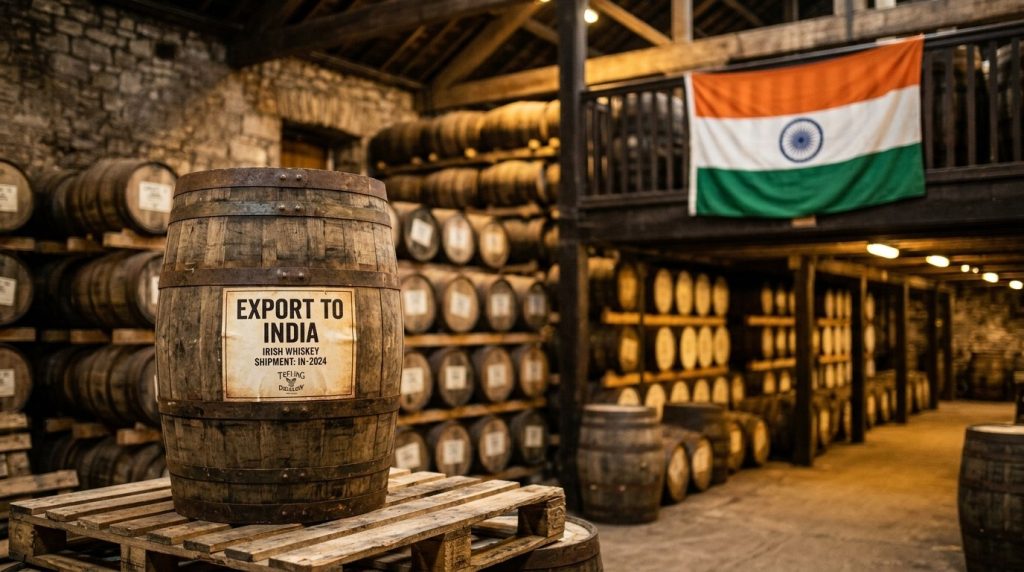
- Irish Whiskey and Spirits: This is a major win. Tariffs on Irish whiskey, which were as high as 150%, will be gradually reduced to 40% over seven years . This will give Irish whiskey producers a major boost and create new opportunities in one of the world’s most dynamic consumer markets .
- Agri-Food: The deal brings significant tariff reductions on other agri-food products of interest to Ireland, including sheep meat and some pork products . While the most sensitive products like beef and poultry are excluded, the improved access is a positive step .
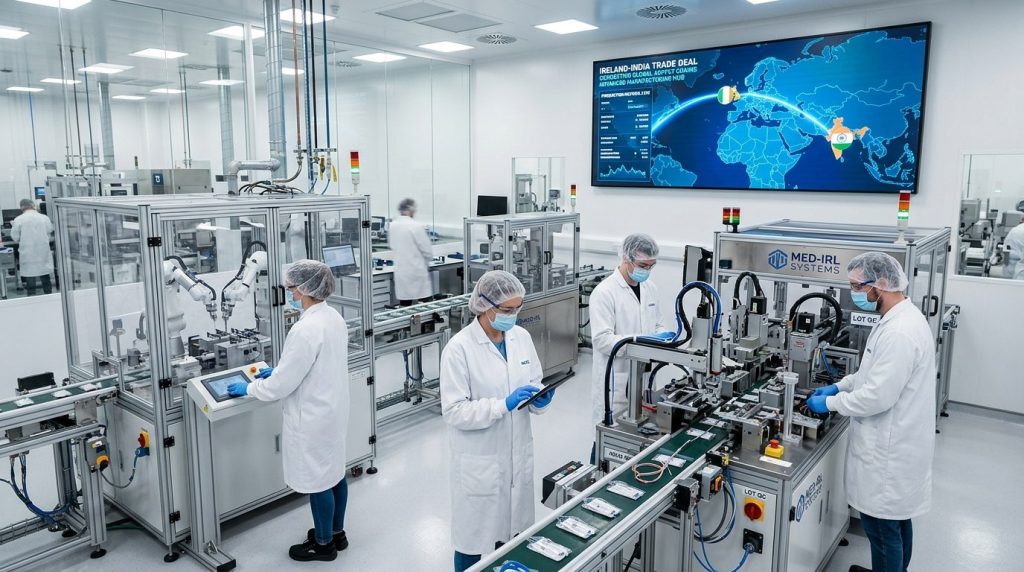
- Pharmaceuticals, Medical Devices, and Technology: This is the heart of Ireland’s export economy. The vast majority of industrial products, including machinery, chemicals, medical devices, and tech equipment, will benefit from full tariff elimination . This is of “utmost strategic importance” for the Irish economy .
- Professional Services: The deal also improves conditions for trade in services and investment, supporting Ireland’s strong export sectors in fintech, ICT, and other professional services . The FTA opens significant opportunities in high-end, high-tech services such as AI, life sciences, and cybersecurity .
Ireland’s Unique Position
Ireland is uniquely positioned to capitalise on this agreement. Trade between Ireland and India is already valued at €16 billion annually, accounting for roughly 10% of the EU’s total trade with India . As Ambassador Kevin Kelly has noted, this is a remarkable achievement for a country of Ireland’s size .
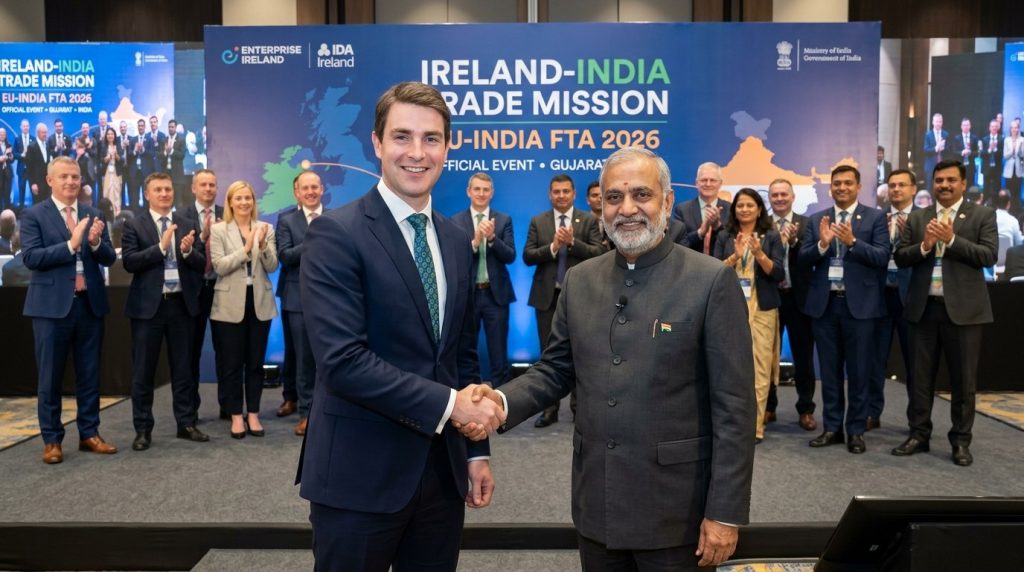
Beyond the numbers, Ireland has a range of distinct advantages . It has a strong and growing reputation as a hub for talent and innovation. It is an English-speaking country with a legal and regulatory system familiar to international businesses. The government is also committed to strengthening the partnership, with recent trade missions to India, like the one led by Minister Jack Chambers, focusing on unlocking new opportunities .
New Horizons: Direct Flights and People-to-People Ties
The agreement is also opening up other forms of collaboration. Minister Chambers’ trade mission included meetings with airlines Air India and IndiGo to discuss the potential for developing a direct airline route between Ireland and India . Such a route would be a game-changer for business connectivity and also serve the approximately 100,000 people of Indian origin living in Ireland .
The agreement also includes a mobility framework, with a Memorandum of Understanding (MoU) signed on a Comprehensive Framework of Cooperation on Mobility . This is designed to facilitate the legal mobility of skilled workers, students, researchers, and seasonal workers . While this MoU is a political declaration and does not create new legal obligations, it establishes a framework for deeper cooperation . A proposed EU Legal Gateway Office in India will act as a one-stop hub to provide information on legal migration pathways .
Looking Ahead
The EU-India Free Trade Agreement is a major milestone. It is expected to be signed by the end of 2026 and come into force in the first half of 2027 . For Ireland, it represents a historic opportunity to deepen an already strong partnership with one of the world’s fastest-growing economies and create a more resilient and prosperous future .