The fight for freedom in Ireland and India was not fought in isolation. For decades, nationalists from both countries exchanged ideas, supported each other’s causes, and drew inspiration from one another’s struggles against British rule. This connection created a bond that went beyond geography. It was a partnership built on a common enemy and a shared dream of independence.
Early Connections and Mutual Inspiration
The relationship between Irish and Indian nationalists grew out of their shared experience under the British Empire. Studies have often compared the two independence struggles. Both nations were colonies of Britain. Both faced similar forms of oppression. And both developed movements that looked to each other for guidance.
Indian and Irish nationalist movements were linked by a history of rebellion against British rule. The year 1916 witnessed the intensification of transnational relations and anti-British collaboration between sets of nationalists from both independence movements. From the formation of an Irish-style Volunteer Force in Calcutta in 1928, to the propaganda campaign to gain recognition for Indian independence in the mid-1930s, Ireland was an evident influence on Indian nationalists throughout their struggle.
Annie Besant: A Bridge Between Two Struggles
Perhaps the strongest tie between Ireland and India was Annie Besant. She was born in London in 1847 into a family with deep Irish roots. Her mother was Irish, and her father was of mixed Irish and English descent. Being three-quarters Irish, she felt a strong connection to Ireland.
Besant was a passionate supporter of both Irish and Indian self-rule. She blasted British imperialism and pushed for Irish independence, taking part in the Bloody Sunday protests in London in 1887. But her greatest impact came in India.
She first travelled to India in 1893. In 1916, she launched the All India Home Rule League. This was the first faction in India that demanded complete independence. Besant modeled the Indian Home Rule movement along the lines of the one in Ireland. She was inspired by the Irish Home Rule League and brought that same spirit of agitation to India. In 1917, she became the first woman president of the Indian National Congress.
Besant was perhaps the first powerful woman in Indian politics. She introduced an agitational style for demanding Swaraj, or self-rule, for India. Her work helped transform the Indian independence movement. And it all came from a woman who never forgot her Irish heritage.
The Indian-Irish Independence League
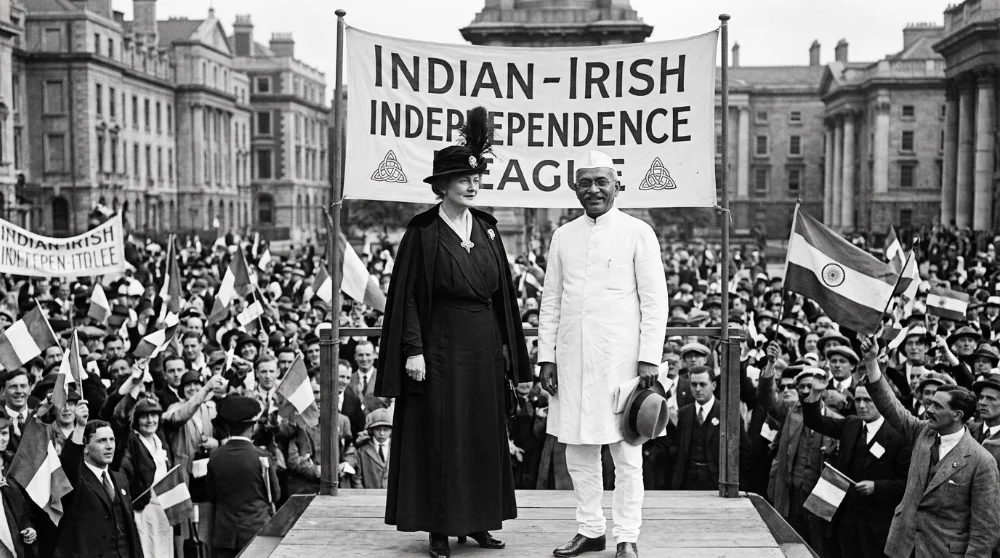
The connections between Irish and Indian nationalists became more formal in the 1930s. On 30 July 1932, an article appeared in the Irish newspaper An Phoblacht announcing the formation of a group called the Indian-Irish Independence League.
The League’s mission was clear. It would work “by every possible means to secure the complete independence of India and Ireland, and to achieve the closest solidarity between the Irish and the Indian masses in their common struggle against British imperialism”. The League aimed to link the Irish and Indian independence movements to fight against the British Empire.
The formation of this group was the brainchild of some formidable figures from both countries’ independence movements. On the Irish side, founder members included Maud Gonne MacBride, Charlotte Despard, Frank Ryan, and Peadar O’Donnell. Maud Gonne MacBride acted as President. Mary Woods served as joint treasurer and joint secretary.
The Indian politician most prominent was Vithalbhai Javerbhai Patel. He was the ex-president of the Indian legislative assembly and the older brother of Sardar Patel, who later became Nehru’s right-hand man. V.J. Patel travelled to Ireland four times throughout the 1920s and 1930s. He was a keen follower of the Irish independence movement.
Patel took part in public ceremonies while in Ireland. An Indian-Irish Independence League meeting in College Green during his 1932 trip attracted as many as 3,000 people. Patel was also with de Valera in St Stephen’s Green on 3 July 1932 at the unveiling of the Countess Markievicz Memorial. The Irish Press reported that “a white-clad, grey-haired figure, in a square white Gandhi cap, Mr Patel looked quite at home in this Dublin crowd, who pressed round to shake hands and wish India God-speed”.
Throughout his time in Dublin, Patel encouraged Irish people to copy the boycott of British goods that was proving so successful in India. Such tactics had been adopted in Ireland at the beginning of the economic war. A few months after Patel’s visit, An Phoblacht carried advertisements for a new shop, the Indian Stores on Dame Street, that would facilitate those wishing to boycott British goods. The advertisement stated: “Tea direct from India. Buy Irish first, then buy Indian”.
The League’s boycott of British goods established a clear link between the Indian-Irish Independence League and traditional Irish nationalist activism. The two leagues also shared an address, 44 Parnell Square, which was also a base for other republican organizations. The overlap of members in each organization, and its location at the hub of Irish nationalist activity, made the link between the movements very clear.
Subhas Chandra Bose and His Visit to Ireland
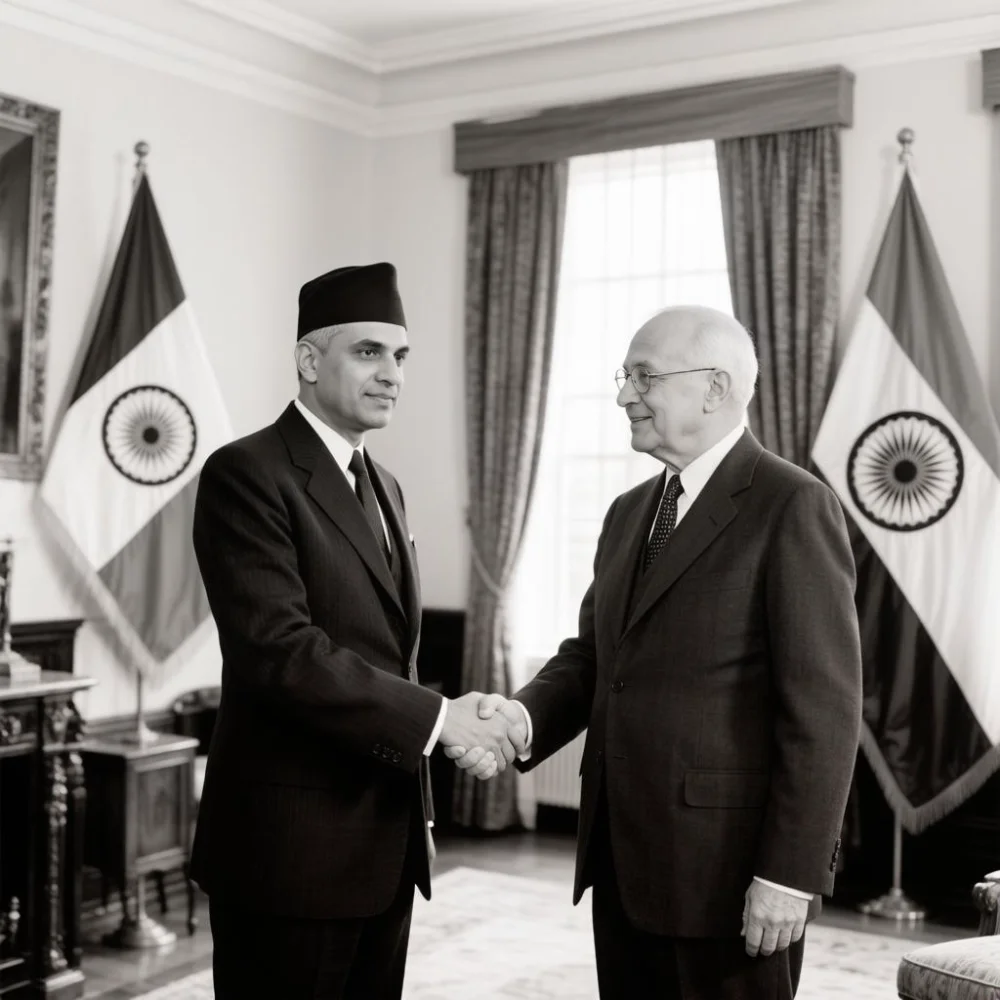
Subhas Chandra Bose was one of India’s most prominent nationalist leaders. Ireland was an evident influence on Bose throughout his life.
Bose’s intention to visit Ireland finally reached the public domain via a short report in the Irish Times on 25 January 1936. He wanted to connect with politicians across all parties, union leaders across various industries, and, importantly, the leader of the Dáil, Éamon de Valera.
De Valera engaged with Bose as head of state. The respect and admiration Bose afforded de Valera in 1936 is interesting, considering that de Valera’s domestic and capitalist ideology would not normally have aligned with Bose’s views. But their shared opposition to British rule created a common ground that transcended other differences.
At midnight on 15-16 January 1938, Bose met de Valera and had a long talk in which they reportedly discussed the political destinies of India and Eire in detail. When to fight and when to negotiate was something that Bose was constantly trying to learn from the example, both positive and negative, of Irish history.
On his arrival in London, Bose had been described by one newspaper as “India’s de Valera”. This comparison showed how closely the two struggles were linked in the public mind. Bose was a student of Irish history. He saw Ireland’s fight for freedom as a model for India’s own struggle.
A Legacy of Solidarity
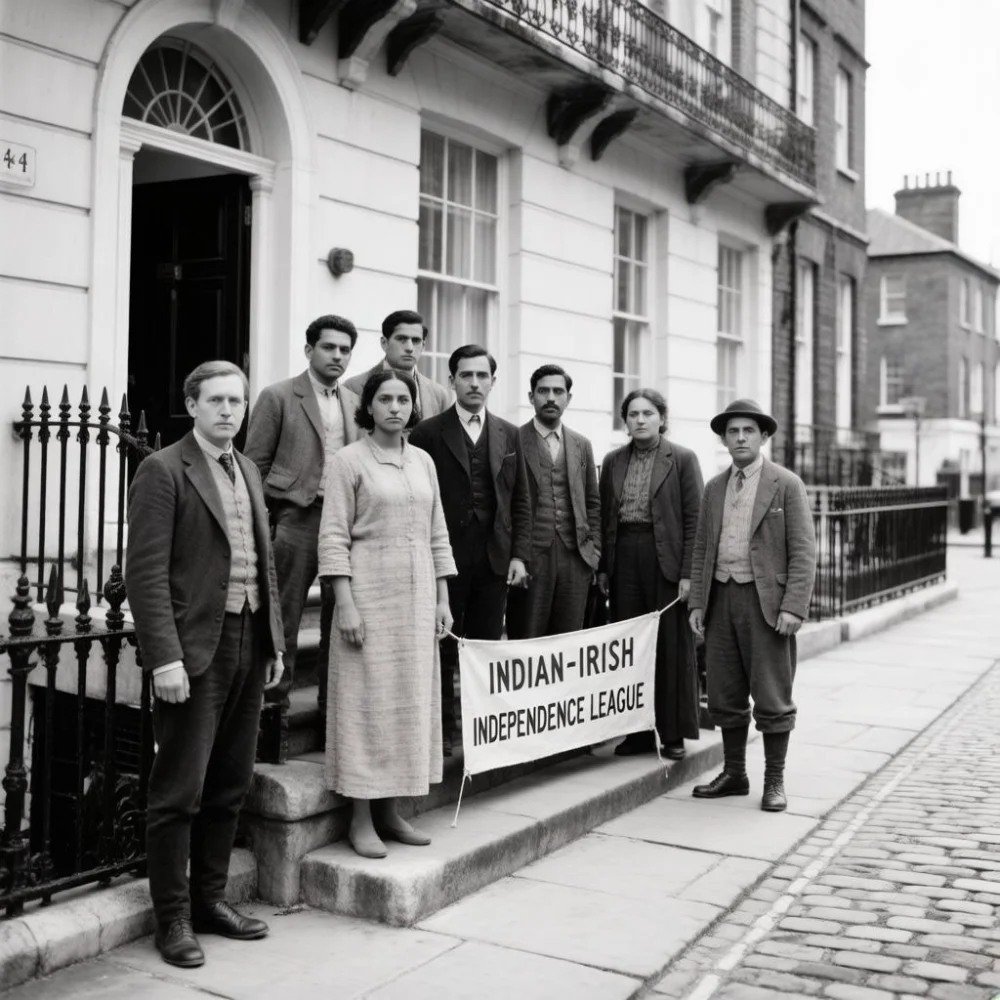
The connections between Irish and Indian nationalists went beyond politics. Keen friendships developed between a variety of Irish and Indian agitators, embracing many of the leading political and literary figures of the day from both countries. As a result of their shared imperial histories, comparisons and connections influenced the respective revolutionary activists.
The British were well aware of these connections. British intelligence services kept track of nationalist movements and contacts in Ireland. They were clearly anxious that Ireland was providing Indian nationalists with pertinent revolutionary precedents.
The many similarities between both Ireland and India’s nationalist struggles were acknowledged formally in 1932 with the formation of the Indian-Irish Independence League. This was not just a political alliance. It was a recognition that the two nations shared a common enemy and a common goal.
The story of Irish and Indian nationalists is one of mutual support and shared inspiration. From Annie Besant, who brought the Irish Home Rule model to India, to the Indian-Irish Independence League, which united activists from both countries, to Subhas Chandra Bose, who sought guidance from Irish history – the connection was real and lasting.
These nationalists understood that their struggles were part of a larger fight against imperialism. They learned from each other. They supported each other. And they inspired each other to keep fighting for freedom. The bond they forged continues to shape the relationship between Ireland and India to this day.