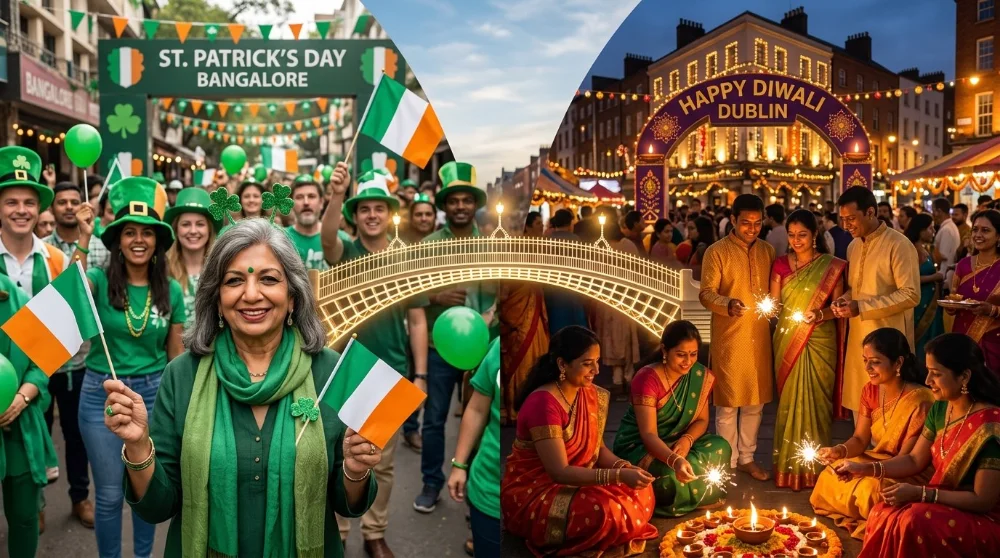
The relationship between Ireland and India goes back over 400 years. It is a story of empire and resistance, of shared suffering and mutual inspiration. Two nations, separated by thousands of miles, found themselves bound together by the British Empire. Ireland was England’s oldest colony, and India was its largest. This shared experience created a connection that has lasted for centuries.
The First Encounters: Irish Presence in India
Irish people have had a presence in India since at least the 17th century. They came as soldiers, administrators, doctors, and missionaries. Many were part of Britain’s imperial machine. At the time of the East India Company’s rule, Irish civil servants went in large numbers to serve in India. They saw it as an attractive career path. This movement of people helped Britain expand into Asia.
Most Irish who went to India in the early days joined the military or civilian service of the East India Company. Some rose to great power. By the late 19th century, Irishmen ran seven of the eight provinces of British India.
But the Irish in India were not a single group with one view. Some were loyal to the Empire. Others became critics of British rule. Ireland’s own history under British rule shaped how some Irish in India saw the country. Some Irish officials even feared that Indian nationalism would follow the same path as Ireland’s Home Rule movement.
Two Colonies, One Empire
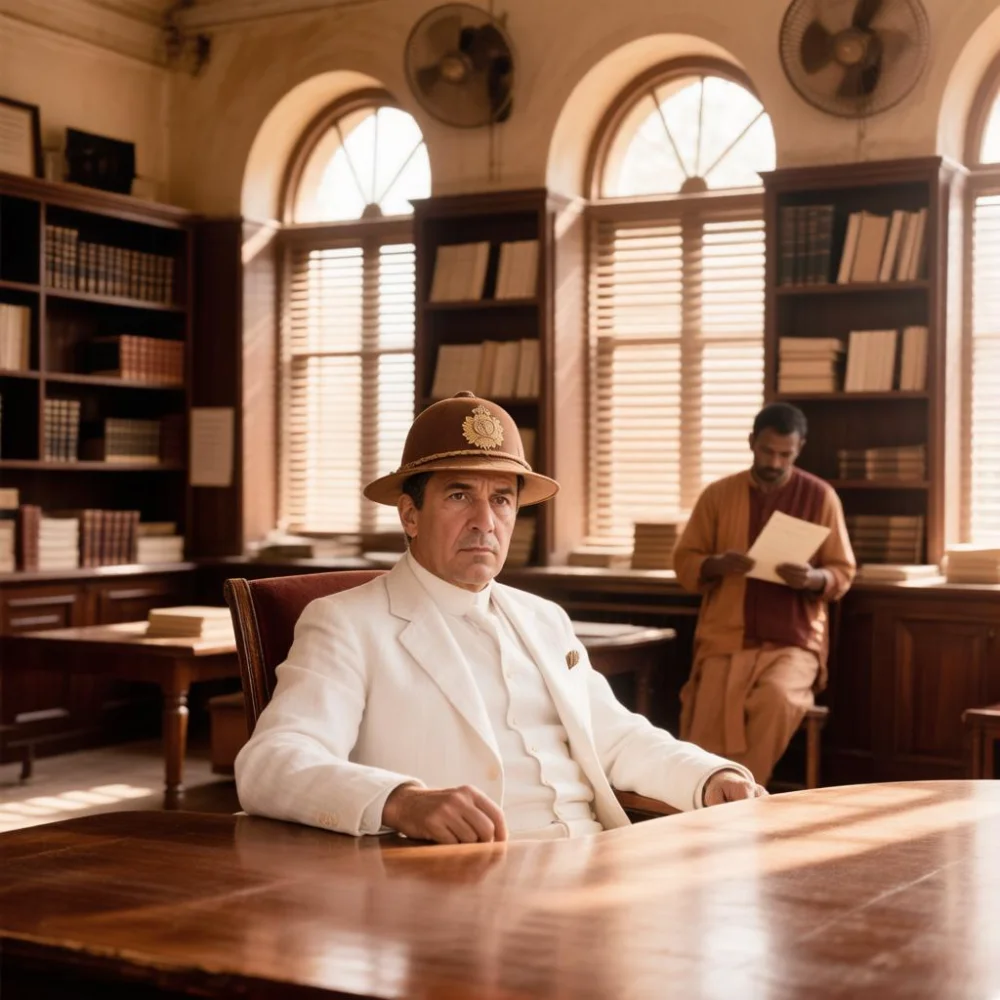
Ireland and India shared a difficult position under British rule. Ireland was part of the British Empire, in some ways like India. But the relationship was complicated. The Irish were victims of imperialism, but they were also active participants in it. They served the Empire in India. But there were also Irish subversives within the imperial system.
The British brought Irish people with them to India, often in positions of power. By the 19th century, about two-thirds of the British army’s white soldiers in India were Irish. Many were Irish-Catholics and were treated like indigenous sepoys. They could not become officers. The officers were typically Anglo-Irish Protestants.
Why did so many Irish join the British army in India? Mostly because there was no economic opportunity at home. Many volunteered not because they believed in the Empire, but because poverty left them few choices. Ireland supplied food and human capital for the army. Ireland’s biggest export has always been its people.
The British also used Ireland as a testing ground. Policies perfected in Ireland were later adopted in India. Education was one example. Curricula developed in Ireland were taught in India. Policing was another. Both India and Ireland had coercive models of armed policing.
Early Indian Migration to Ireland
While the Irish went to India, Indians also came to Ireland. This migration trend dates to the late 1700s. Dean Mahomet was one of the first Indians to settle in Ireland. He was born in Patna. While living in Cork, he published the first English-language book written by an Indian.
A century later, Mir Aulad Ali, a Muslim scholar from modern-day Uttar Pradesh, was appointed professor of Arabic, Hindustani, and Persian at Trinity College Dublin. This shows that even in the 19th century, there were intellectual connections between the two countries.
The Fight for Freedom: Mutual Inspiration
The nationalist movements of Ireland and India were linked by a shared history of rebellion against British rule. Studies have often compared the two independence struggles. Irish and Indian nationalists supported and took inspiration from each other’s fights.
Annie Besant was a key figure in this connection. She was of Irish descent. She fought for women’s rights, workers’ rights, and independence in both Ireland and India. She blasted British imperialism and pushed for Irish independence. She moved to India in the 1890s. There she started the Indian Home Rule League in 1916, along the lines of the one in Ireland. She became the first female president of the Indian National Congress in 1917.
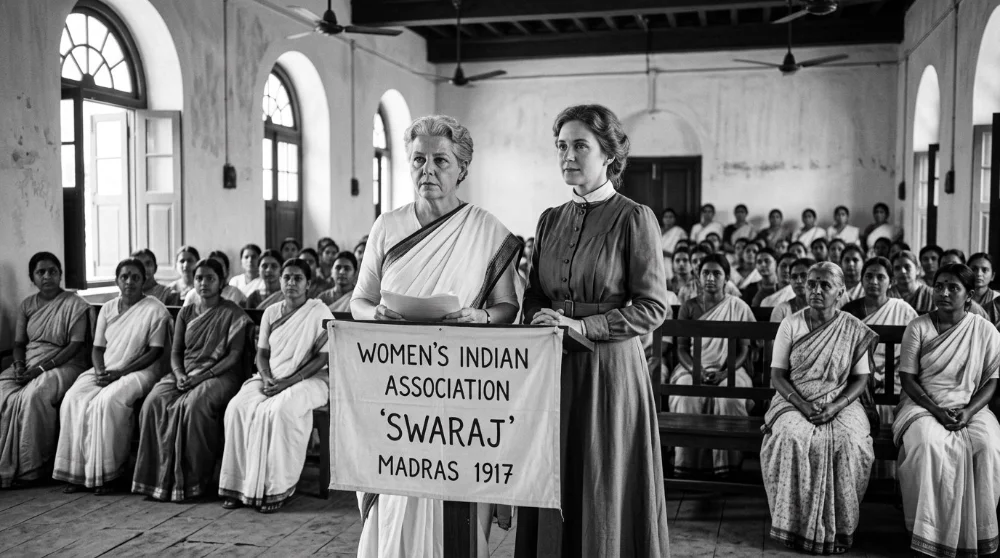
Margaret Cousins was another Irish woman who fought for Indian independence. Born in County Roscommon in 1878, she moved to India in 1915. She brought the campaigning skills she had learned as a co-founder of the Irish Women’s Franchise League. Two years later, she helped found the Women’s Indian Association. She argued that India’s national development depended on female emancipation. She worked for girls’ schooling and against child marriage. Unlike some European activists, she developed equal relationships with Indian women. She became a critic of British imperialism. In 1932, she was imprisoned for protesting colonial restrictions. After independence, she received an Indian government award for her contributions to the freedom struggle.
The Easter Rising and Its Impact
The 1916 Easter Rising in Ireland inspired Indian revolutionaries, particularly in Bengal. Indian freedom fighters drew comparisons between their colonial experiences and Ireland’s. They saw Ireland’s struggle as a model for their own.
The Irish republican leader Éamon de Valera stressed the common cause of Ireland and India. He spoke of the bond between the two nations. Indian leaders like Jawaharlal Nehru were said to be in touch with him.
The Amritsar Massacre and Its Irish Connection
The 1919 Amritsar Massacre is a dark moment in the shared history of Ireland and India. British General Reginald Dyer ordered a shoot-to-kill policy, and more than 74,000 people died. Dyer was born in modern-day Pakistan but was educated in Cork and Dublin. The lieutenant governor of Punjab at the time was Michael O’Dwyer, who was born in County Tipperary. He considered himself an Irish nationalist, but his sympathies did not extend to the Indian cause. This shows the complex and sometimes painful connections between the two countries.
The 1930s: A Decade of Solidarity
In the 1930s, the connection between Irish and Indian nationalists grew stronger. An India store in Dublin sold tea and other products shipped directly from India. The store catered to people who supported the boycott of British goods during the freedom movement. Irish republicans campaigned to boycott British goods, reflecting on Mahatma Gandhi’s boycott movement. The shop had a portrait of Gandhi at the front window.
In July 1932, the Indian nationalist Vithalbhai Patel arrived in Dublin. He discussed the potential establishment of an Irish campaign for Indian independence. Patel held talks with Éamon de Valera. He received a warm welcome at a meeting of the Irish branch of the League against Imperialism. Irish republicans like Maud Gonne MacBride and Molly Woods helped found the Indian-Irish Independence League. The league’s goals were to secure the complete national, social, and economic independence of Ireland and India. They wanted a complete boycott of British goods and to spread the truth about the Indian struggle.
In 1936, the group hosted a visit to Ireland by Subhas Chandra Bose. Bose was a future president of the Indian National Congress and a keen student of Irish history. He met with Éamon de Valera in Dublin in February 1936. They reportedly had a long talk in which they discussed the political destinies of India and Ireland in detail. Bose was one of many Indian revolutionaries who found inspiration in Ireland’s fight for freedom.
The Path to Independence
Both Ireland and India won their independence from Britain in the 20th century. Ireland became a republic in 1949. India gained independence in 1947.
Formal Diplomatic Relations
Ireland was one of the first countries to welcome and acknowledge India’s independence in 1947. Formal diplomatic relations between the two countries were established in a joint declaration on 10 January 1949. This marked the beginning of a new chapter in their long history.
India opened an embassy in Dublin in 1951. Ireland opened its embassy in New Delhi in 1964. The delay in opening an Irish embassy shows that the relationship took time to develop fully. But the foundation had been laid.
Cultural and Literary Connections
Beyond politics, Ireland and India have deep cultural ties. Literature and poetry have brought the two nations together. The Irish poet W.B. Yeats was a supporter of the Bengali poet Rabindranath Tagore. He wrote the preface to Tagore’s masterpiece Gitanjali. Tagore’s play The Post Office had its world premiere at Dublin’s Abbey Theatre in the early 19th century. These two Nobel laureates explored themes that went beyond geography. They fostered a deeper understanding of each other’s literary traditions.
Irish religious orders also set up a number of schools in India, many of which still operate today. This educational legacy has lasted for generations.
The Modern Relationship
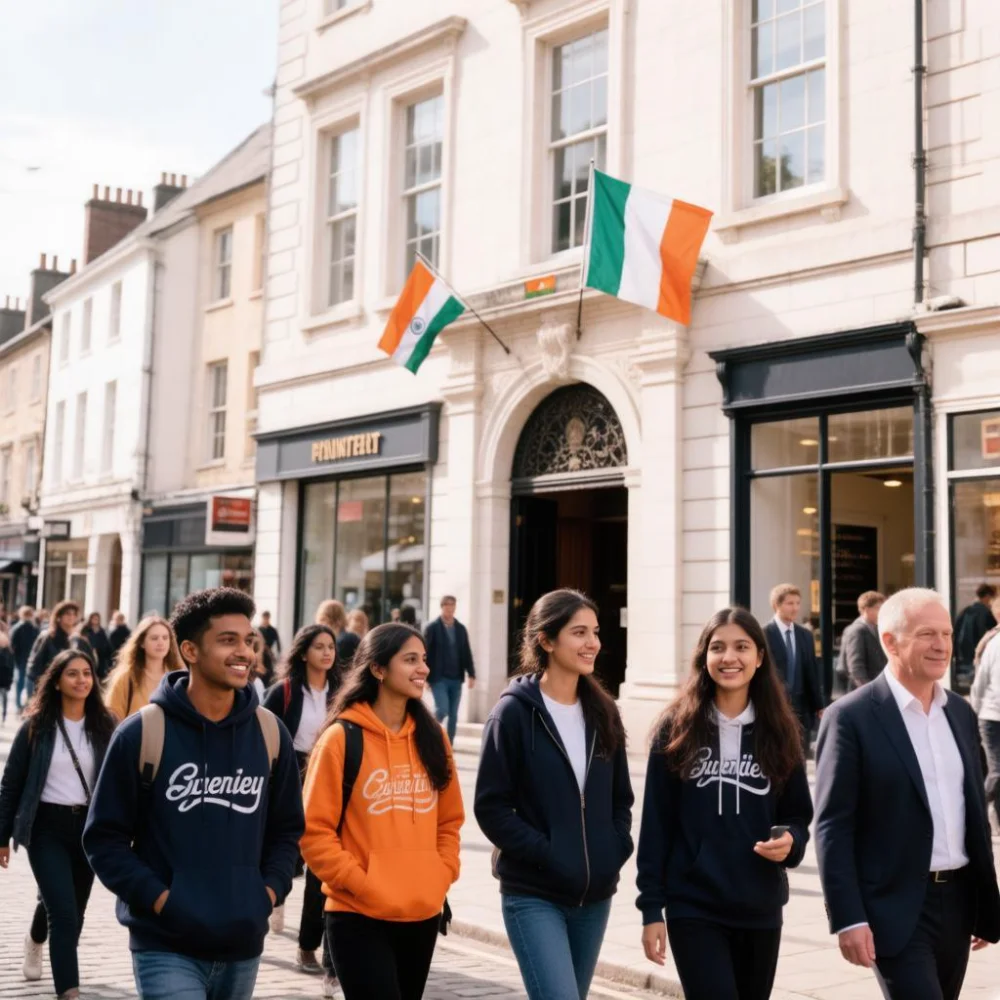
Today, the relationship between Ireland and India is stronger than ever. The Indian diaspora is the fastest-growing immigrant community in Ireland. Ireland is estimated to be home to more than 80,000 Indians, the third-largest immigrant group after Polish and British nationals. Indian students are increasingly choosing Irish universities. More than 8,000 Indian students studied in Ireland in 2023, more than ten times the number in 2013. These young scholars create lifelong connections between the two countries.
A small but growing Irish population, estimated at around 550 people, has made India their home. Cultural connections continue to thrive through literary exchanges, academic collaborations, and cultural festivals.
Economic Ties
Economic ties have also grown. Two-way trade in goods and services now totals over €16 billion annually. India and Ireland have identified synergies in information technology, pharmaceuticals, and trade. Ireland’s position within the European Union offers Indian businesses a gateway to Europe. India’s growing market provides opportunities for Irish enterprises.
Ireland has expanded its presence in India. In April 2019, it opened a Consulate General in Mumbai. The opening of “Ireland House” in Mumbai co-located the Consulate General, Enterprise Ireland, and IDA in India’s commercial capital. This shows Ireland’s commitment to deepening its relationship with India.
A Shared Future
The story of Ireland and India is one of deep and lasting connections. From the 17th century to today, the two nations have been linked by empire, resistance, culture, and migration. They have inspired each other in the fight for freedom. They have built cultural and economic ties that continue to grow.
The relationship was formally established in 1949, but the connection goes back much further. It is a story of shared struggles and mutual respect. It is a story that continues to be written today. The bond between Ireland and India, forged over centuries, shows no signs of weakening. It is a partnership built on trust and shared aspirations. The two countries look to the future with confidence, knowing that their shared history has prepared them for a strong and lasting friendship.