For over two centuries, Ireland and India were joined together by intricate networks of migration and imperial service. Whether as soldiers, administrators, doctors, missionaries or educators, the Irish played an important role in administering, governing and populating vast areas of Britain’s eastern empire. Most of the Irish who went to India in the early phases of British occupation went there in the military or civilian service of the East India Company. Missionaries and planters followed in the nineteenth century. India was a place where fortunes could be made. But it was also a place where many succumbed to the climate and died young.
The Administrators: Running the Raj
Irish civil servants played an important role in governing what was Britain’s largest colony. At the time of the East India Company’s rule, Irish civil servants went in large numbers to serve in India, considering it an attractive career path. The scale of their influence was remarkable. By the late 19th century, Irishmen ran seven of the eight provinces of British India. In 1886, five Irishmen were on the Viceroy’s Council. During the 1890s, seven of the eight Indian provinces were at one time headed by Irishmen.
The Punjab province, described as “the pride of British India”, attracted the cream of the Indian Civil Service, many of the most influential of whom were Irish. Two Irish Catholics from modest rural backgrounds, Antony MacDonnell and Michael O’Dwyer, both became lieutenant-governors. The sixth Earl of Mayo was one of the most successful and sympathetic of all the Viceroys.
Recruitment to the Company’s service was initially by nomination of a director. But just before control of India passed from the Company, recruitment changed to competitive examination. This opened the way for able graduates to find a promising career. The Irish universities supplied men to the Indian civil service for over 80 years. A sudden rise in the success of Irish candidates in the Raj civil service exams was vexing high-class English society in the late 19th century.
The Indian civil service achieved a high reputation for impartiality, competence and incorruptibility. Scholarly work was produced by Irishmen like Sir George Abraham Grierson, who compiled the magisterial Linguistic Survey of India between 1898 and 1928. Whitley Stokes compiled the consolidated Anglo-Indian Codes of procedure in civil and criminal law.
The Soldiers: Building the Empire
Irish soldiers contributed massively to the building of the Raj. By the time of the census of 1831, 40% of the British Army was Irish. By the early nineteenth century, the Irish share of ordinary manpower in the East India Company’s army was regularly between 40 and 55 percent. Irishmen serving in the East India Company’s army were paid more than soldiers in the regular army, receiving their wages in the Company’s own silver currency.
Several Irishmen were prominent in putting down the Sepoy mutiny of 1857, including Henry and John Lawrence, both educated at Foyle College in Derry, and John Nicholson, a Dublin-born soldier who led troops in the assault on Delhi. Many of the regiments of the East India Company later transferred to the British Army, and the Madras Fusiliers were eventually renamed the Royal Dublin Fusiliers in 1881. As late as 1900, the Irish contributed about 50 percent of the troops for the East India Company.
The majority of Victoria Cross medals were awarded to Irish soldiers in the nineteenth century, highlighting the large number of Irishmen in the British Army during this time. By 1912, due to the success of the Irish economy, the proportion had fallen to 9.1 per cent.
The Doctors and Engineers: Building Modern India
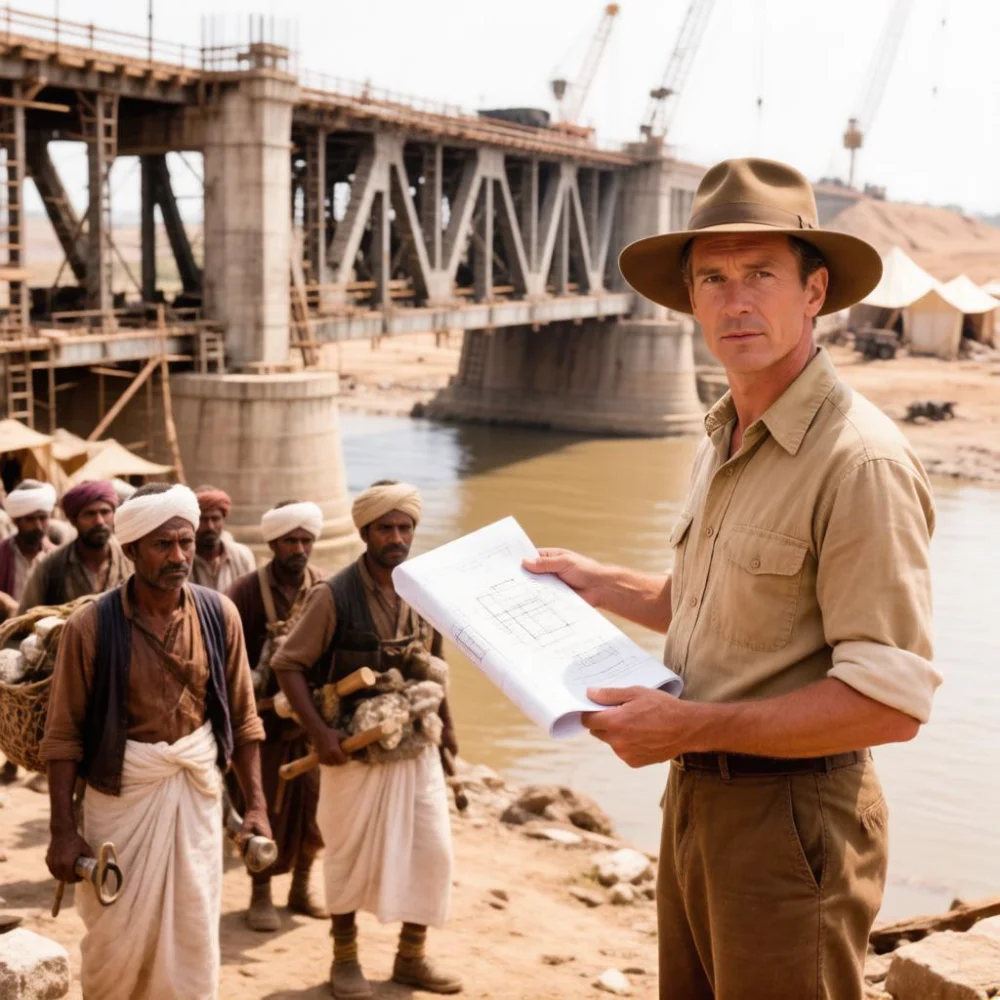
Irish doctors, engineers, lawyers and administrators serviced the empire in India. The universities supplied engineers who worked on large public schemes for water management and on railway lines. By the early 1860s, about 30% of the engineers educated at Trinity College Dublin had gone to India.
William Brooke O’Shaughnessy, born in rural Limerick in 1809, introduced anaesthesia to India and brought eastern medicine to Britain. Irish doctors could be found throughout the empire by the 1860s, with over half of graduates migrating to Britain or joining its uniformed medical services. Colonel Alexander Porter, trained at Queen’s College Belfast, joined the Indian Medical Service in 1865 and served as Principal of the Madras Medical College and Deputy Surgeon General. Thomas Blaney, an Irish physician, became a noted philanthropist in Bombay.
The Missionaries and Educators: Spreading Faith and Knowledge
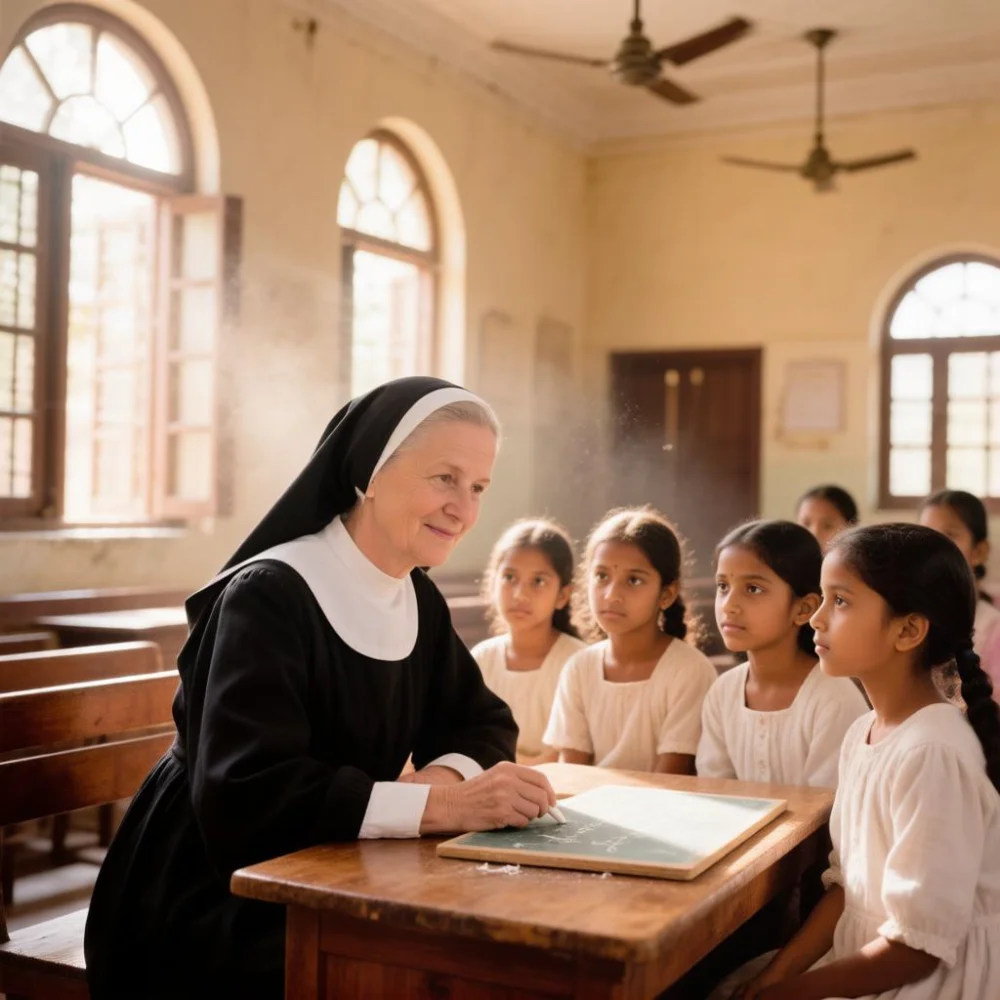
The work of missionaries became a more prominent feature of the Irish presence after 1840. Roman Catholic priests and nuns set up schools in Madras and other cities. Anglican graduates of Trinity College established the Dublin University Mission to Chota Nagpur at the end of the nineteenth century.
The Irish Presbyterian Mission was established in 1840 in Ulster to proselytise Christianity worldwide. It started to send missionaries to the Kathiawar peninsula of Gujarat, India in the 1840s. The first theological training course was set up in 1864 in Ahmedabad.
Reverend Joseph Welland, a missionary from Dublin, founded the Welland Gouldsmith School and dedicated his life to Christian ministry in Calcutta. He built educational institutions in Kolkata including the Cathedral Mission College in 1865 and founded the Welland School in 1876, now the Welland Gouldsmith School. Joseph Rooney was an Irish missionary priest instrumental in founding a number of educational institutions in India during the period of Company rule. James Long, an Anglo-Irish priest, resided in Calcutta from 1840 to 1872 as a member of the Church Missionary Society.
Irish religious orders set up a number of schools in India, many of which still operate today. The Loreto nuns, following Teresa Ball’s pioneering work in girls’ education in Ireland, established a network of Loreto foundations in nineteenth-century India.
Irish women also played a significant role. Margaret Noble, born in Dungannon in 1867, was an Irish-born schoolteacher who became a follower of the Indian spiritual leader Vivekananda. She transformed into Sister Nivedita and became an influential spokesperson promoting Indian national consciousness, unity and freedom. Honoria Lawrence, an Irish-born writer, provided an intimate look at the domestic life of an Anglo-Indian woman during the first half of the nineteenth century and was the first European woman known to live in several parts of the Indian subcontinent.
A Complex Legacy
The story of the Irish in India is a complex one. Some made vast fortunes. James Alexander bought the estate of Caledon in County Tyrone and progressed through the peerage to finish as Earl of Caledon. Robert Gregory of County Galway made himself rich by the age of 40 and returned to London, where he became a director of the East India Company.
But the relationship was not one-sided. While the Irish served the Empire, they also brought their own perspectives. Some Irish public servants in India were moved by their “Irishness” to subvert or eccentrically implement policies of the Raj. The Indian nationalist movement drew inspiration from the Irish example. And the connections went both ways – Irish soldiers in India once staged a mutiny in protest at the actions of British troops in Ireland.
From the 17th century to the early 20th, the Irish presence in India was vast and varied. They were soldiers who built the Empire, administrators who ran it, doctors who healed its people, engineers who built its infrastructure, and missionaries who educated its children. By the late 19th century, their influence was so great that Irishmen ran seven of the eight provinces of British India. The story of the Irish in India is a testament to the deep and lasting connections between two nations, bound together by empire, migration and shared history.